Montessori Method
The Montessori Philosophy
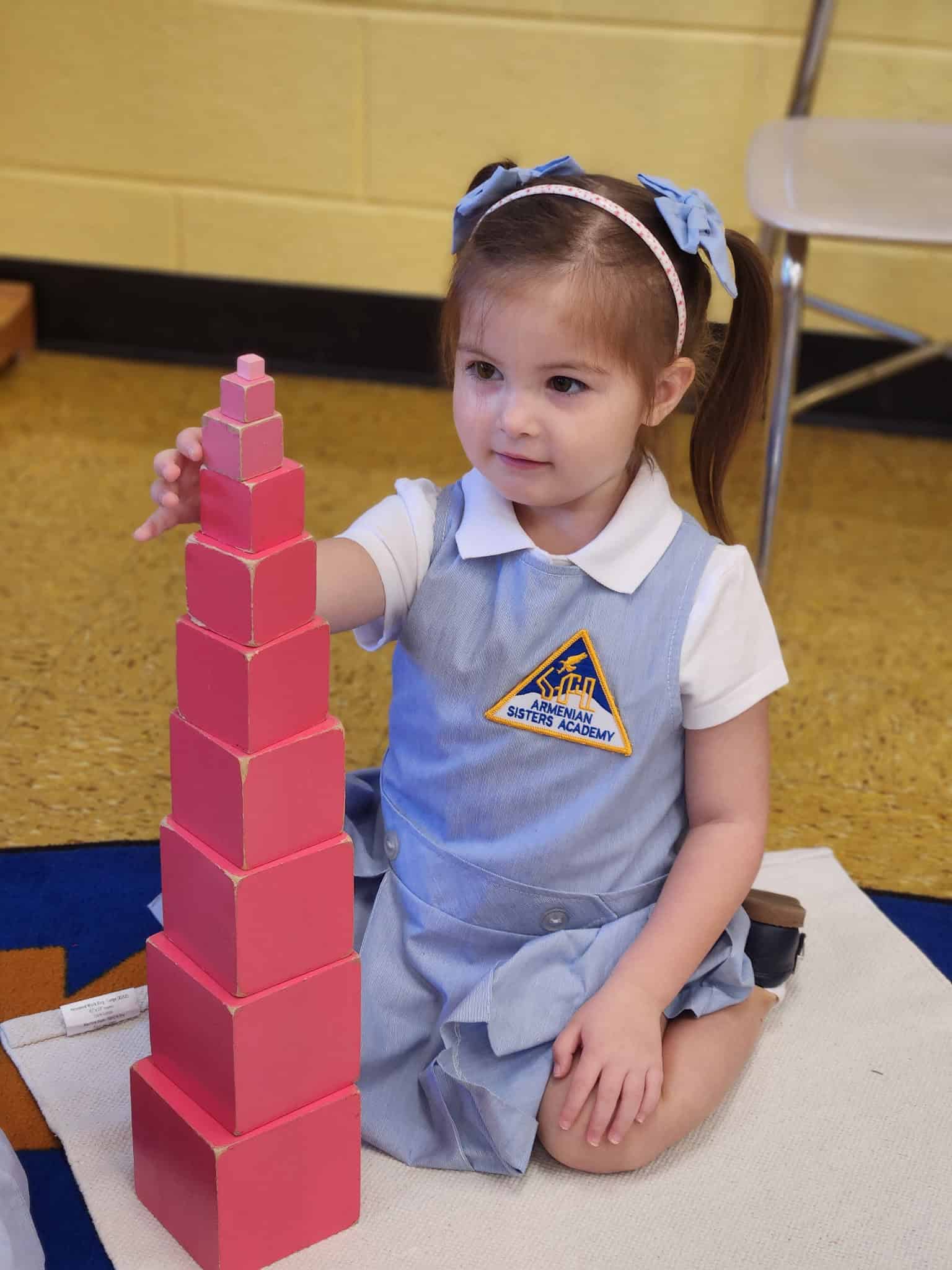 At the heart of Montessori education is the belief that every child is naturally curious, capable, and eager to learn. Developed by Dr. Maria Montessori, the Montessori approach nurtures the whole child — academically, socially, emotionally, physically, and spiritually — while encouraging independence, confidence, and a lifelong love of learning.
At Armenian Sisters Academy, the Montessori program provides a warm, engaging, and carefully prepared environment where children are encouraged to explore, discover, and grow at their own pace. Students learn through hands-on experiences that inspire creativity, critical thinking, problem-solving, and self-motivation.
Teachers serve as guides and mentors, thoughtfully preparing the classroom environment, introducing meaningful learning opportunities, and supporting each child’s individual development. Through purposeful exploration and discovery, students build strong academic foundations while developing responsibility, concentration, and a sense of community.
A Montessori education empowers children to become confident learners, compassionate individuals, and independent thinkers who are prepared for success both inside and outside the classroom.
The Montessori Classroom
Each Montessori classroom is intentionally designed to encourage independence, exploration, and joyful learning. Classrooms are organized into specialized areas of study, including Practical Life, Sensorial, Language, Mathematics, Science, Social Studies, and Armenian Studies.
Learning materials are displayed on accessible, child-friendly shelves and arranged progressively from simple to more advanced concepts. This structure allows students to work independently, make purposeful choices, and progress according to their readiness and interests.
The classroom environment fosters collaboration, curiosity, creativity, and respect while supporting each child’s natural desire to learn.
Areas of Learning
Practical Life
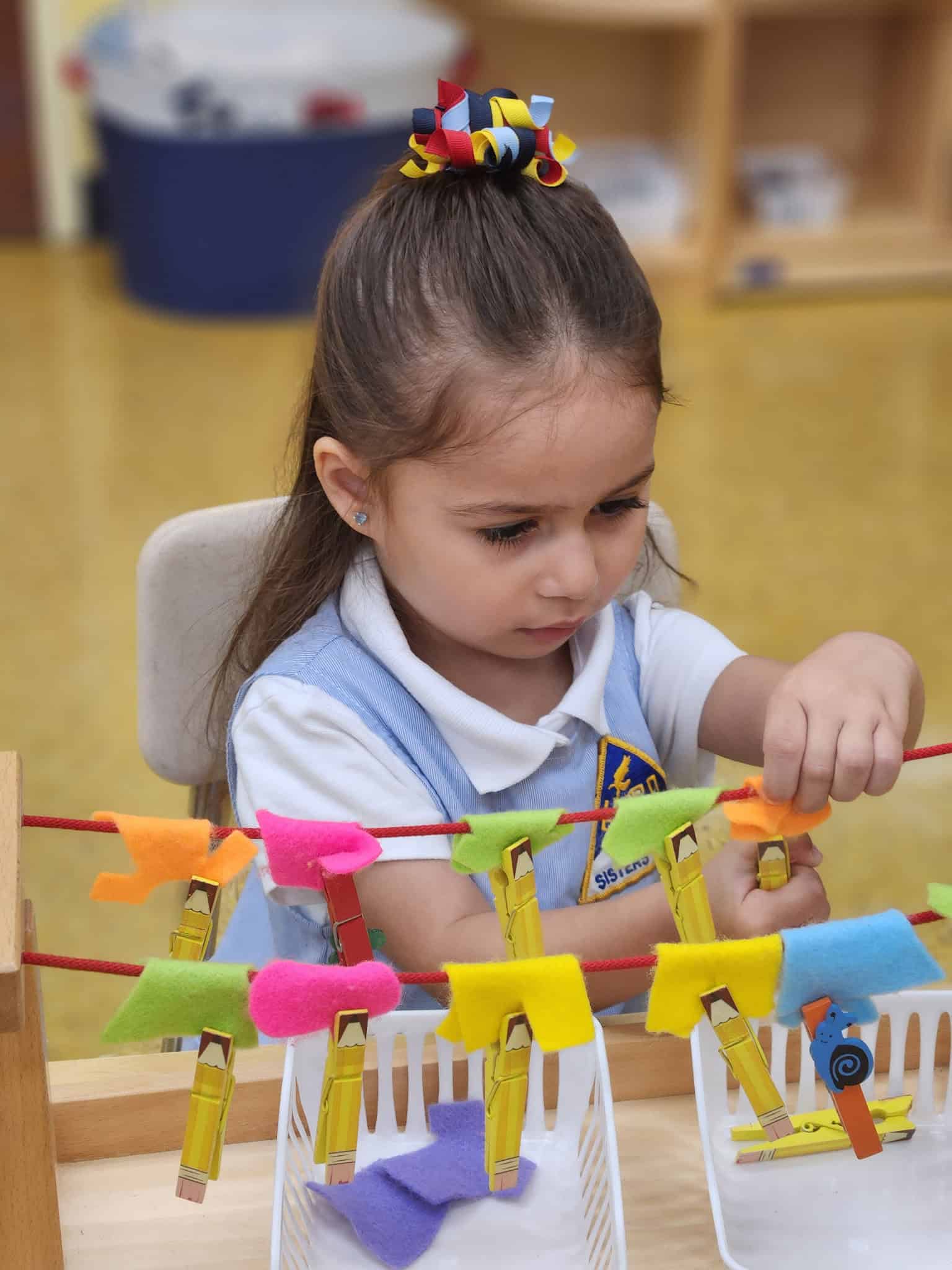 Practical Life activities help children develop independence, concentration, coordination, and organizational skills while building confidence in everyday tasks. These experiences create a strong foundation for future academic learning and personal responsibility.
Sensorial
Sensorial learning materials help children refine their senses and strengthen observation, comparison, classification, and problem-solving skills. Through hands-on exploration, students develop visual, tactile, and auditory awareness while preparing for more advanced work in language and mathematics.
Language (English & Armenian)
Language development is encouraged through conversation, storytelling, reading, writing, and creative expression. Students build strong communication and literacy skills while developing confidence in both spoken and written language. Children are introduced to phonetic reading, vocabulary development, and an appreciation for literature in both English and Armenian.
Mathematics
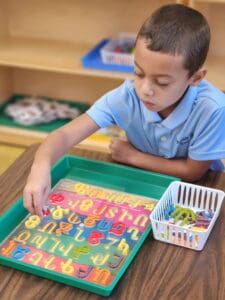
The Montessori mathematics program introduces students to mathematical concepts through hands-on materials that make abstract ideas tangible and understandable. Students develop strong foundations in number sense, arithmetic, patterns, problem-solving, and logical thinking while progressing toward more advanced mathematical concepts.
 Science

Science instruction encourages curiosity, discovery, and exploration of the natural world. Through classroom activities, research, observation, and experimentation, students develop critical thinking skills while learning about physical, earth, and life sciences.
Social Studies
The Social Studies program helps students develop an understanding of communities, cultures, geography, history, and the wider world. Through stories, literature, biographies, and discussions, students learn about people, places, and events that shape society and deepen their connection to the global community.
Armenian Studies
In keeping with the mission of the Armenian Sisters of the Immaculate Conception, students are immersed in Armenian language and culture through conversation, reading, writing, grammar, music, history, literature, and cultural celebrations. The program helps students develop a meaningful connection to Armenian heritage while fostering pride, identity, and cultural appreciation.